What Is DTF Printing? A Complete Beginner's Guide
If you've ever wondered how businesses create colorful, detailed designs on custom T-shirts, hoodies, and other apparel, you may have come across DTF printing.
DTF stands for Direct-to-Film, a printing method that transfers full-color designs onto fabric using specially printed film, adhesive powder, and heat.
Whether you're starting a clothing brand, creating business uniforms, designing merchandise, or making personalized gifts, understanding DTF printing can help you choose the right printing method for your project.
In this beginner-friendly guide, we'll explain how DTF printing works, its benefits, which fabrics it works with, and how to prepare your artwork for professional results.
What Is DTF Printing?
DTF printing, or Direct-to-Film printing, is a garment decoration method that allows colorful designs to be transferred onto fabric.
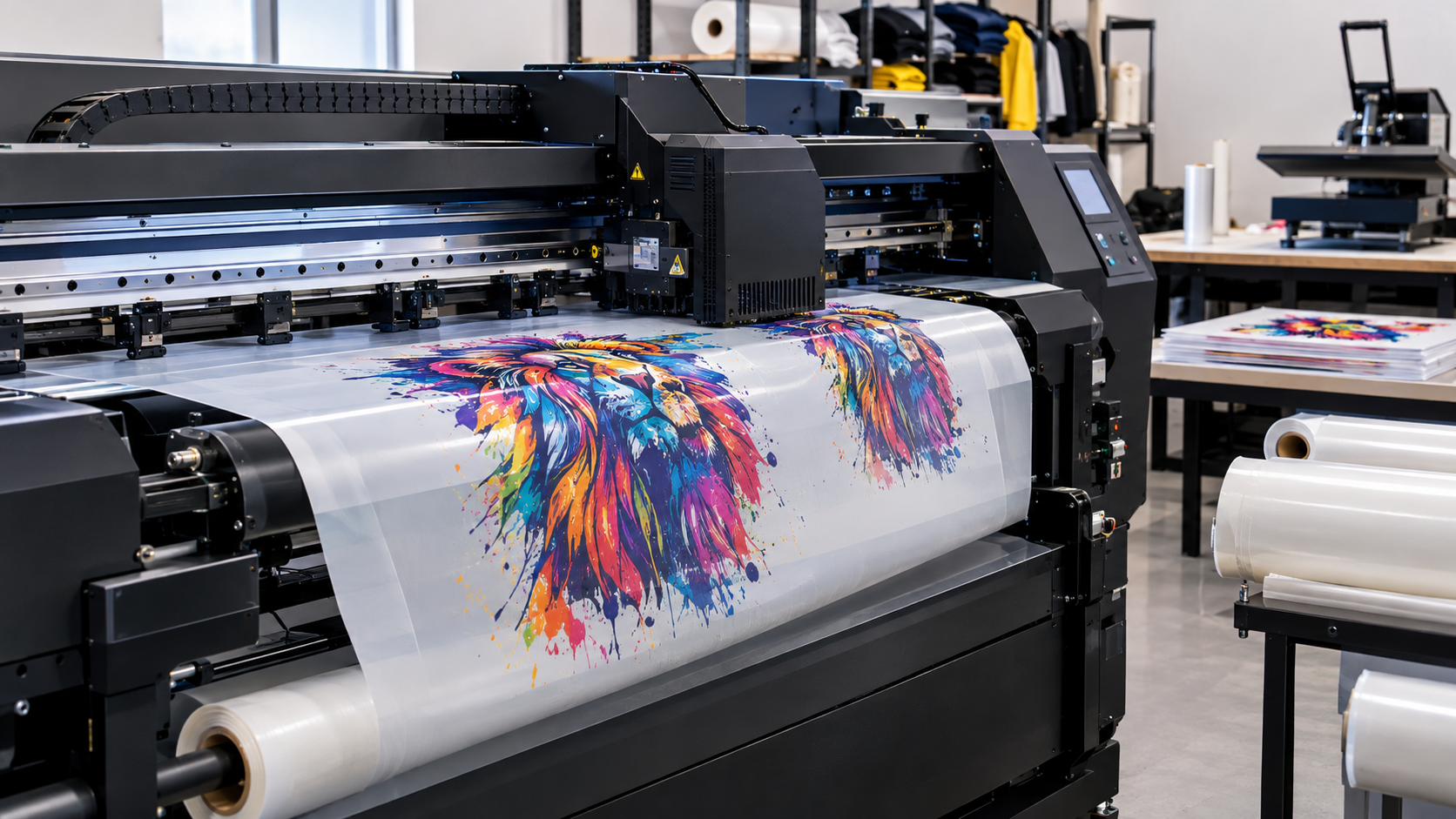
Instead of printing directly onto a T-shirt, a specialized printer applies ink to a transfer film. An adhesive powder is then applied and cured, preparing the design for heat application.
Once the transfer is ready, it can be applied to compatible fabric using a heat press.
DTF printing is commonly used for:
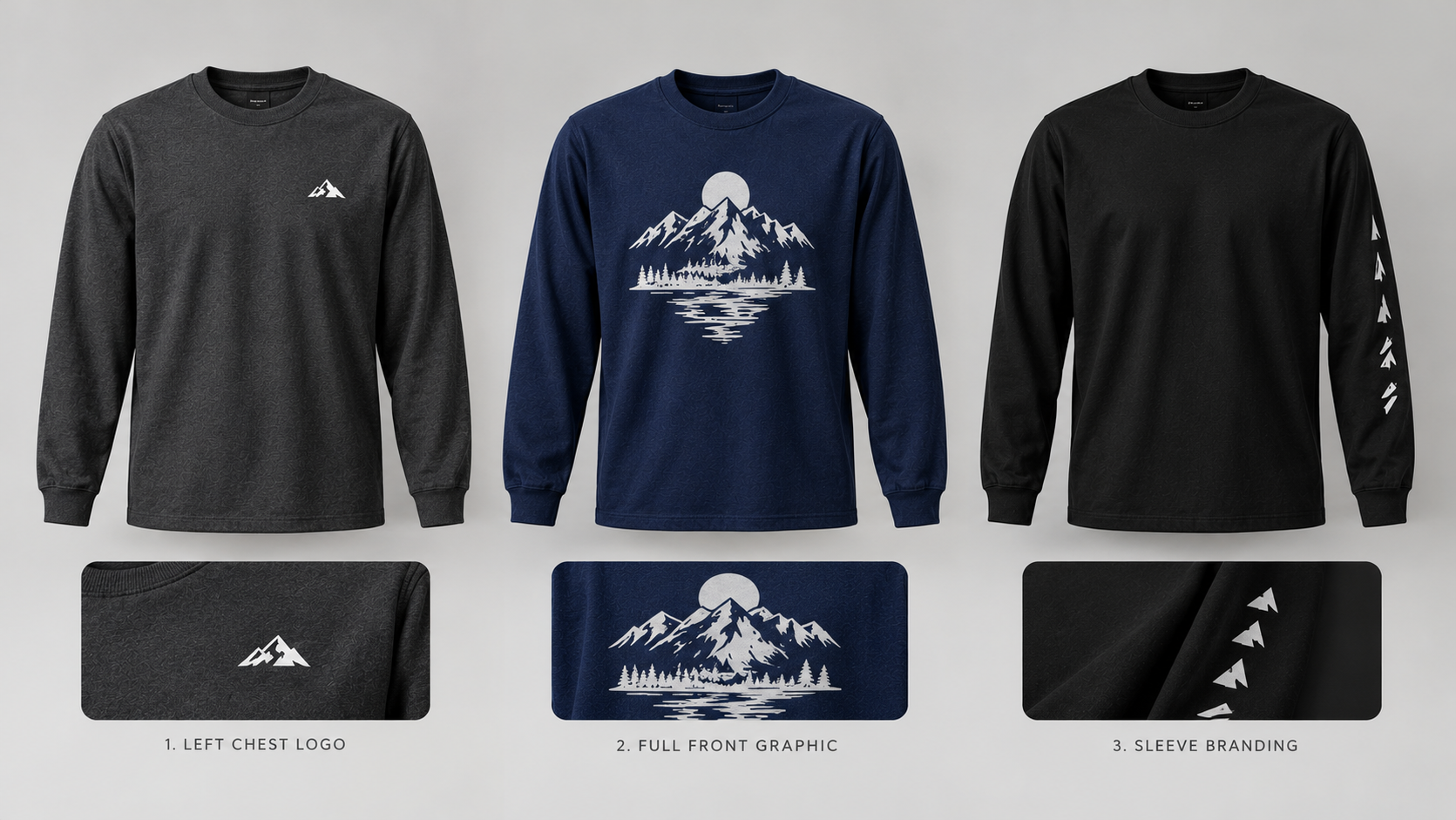
Custom T-shirts and hoodies
Business uniforms and employee apparel
Sports team clothing
Promotional merchandise
Personalized gifts
Clothing brand collections
School and community event shirts
One of its biggest advantages is its ability to reproduce detailed, multicolor artwork without requiring a separate screen for each color.
How Does DTF Printing Work?
The DTF printing process generally involves five main steps.
Step 1: Prepare the Artwork
The process begins with a digital design, such as a business logo, illustration, graphic, or custom text.
For professional printing, artwork should be clear, properly sized, and prepared at a suitable resolution.
Transparent PNG files are commonly used for DTF artwork because they allow the design to be printed without an unwanted rectangular background.
Step 2: Print the Design Onto Film
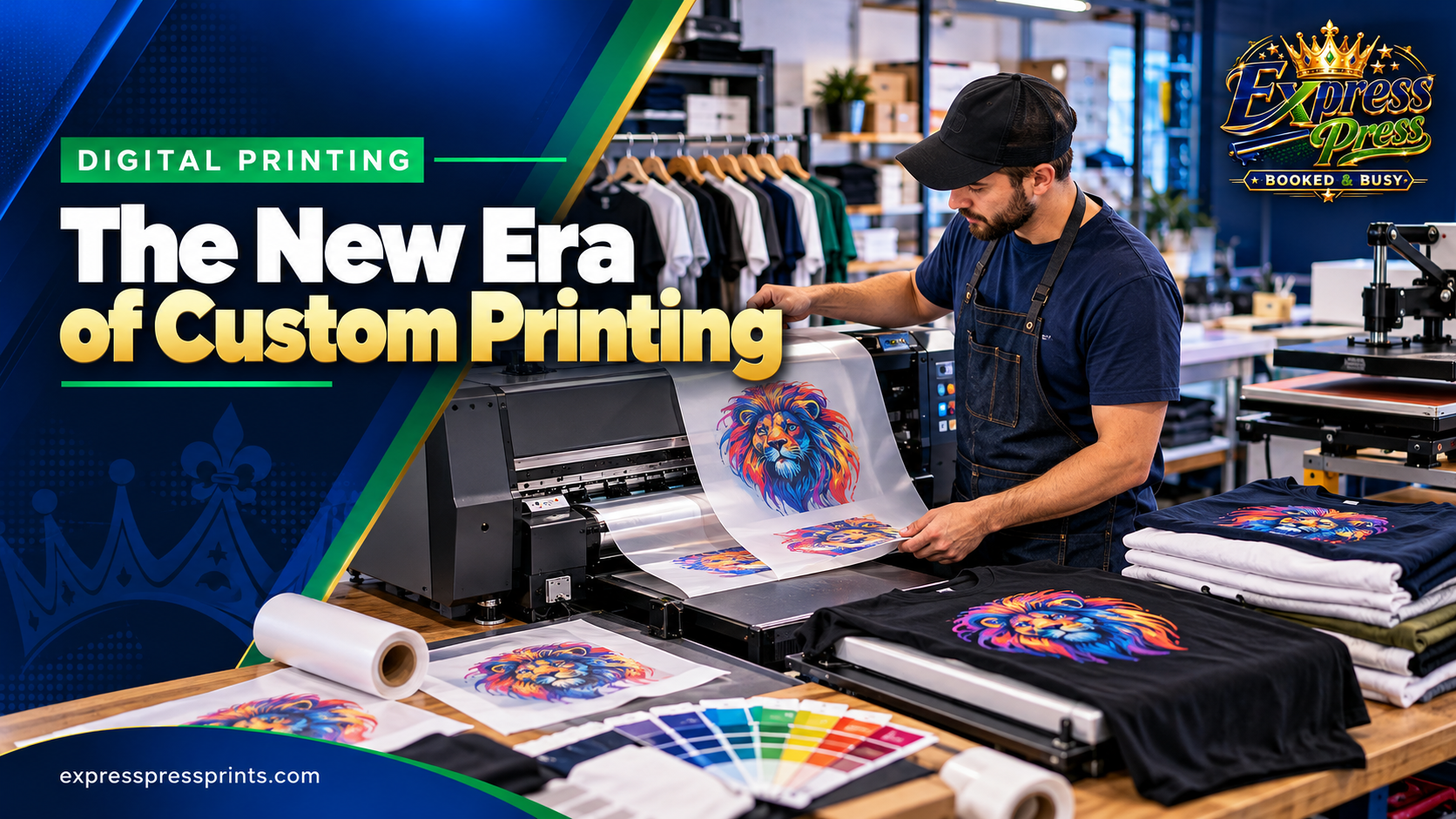
A specialized DTF printer prints the artwork onto a coated transfer film using color inks and, when needed, white ink.
The white ink helps create an opaque backing so colors remain visible on dark garments.
Step 3: Apply Adhesive Powder
A specially formulated adhesive powder is applied to the wet ink.
The powder adheres to the printed design and helps bond the transfer to the fabric during heat pressing.
Step 4: Cure the Transfer
The powdered transfer is heated using suitable curing equipment.
This prepares the adhesive for the final heat-transfer application.
The correct curing settings depend on the ink, powder, film, and equipment being used.
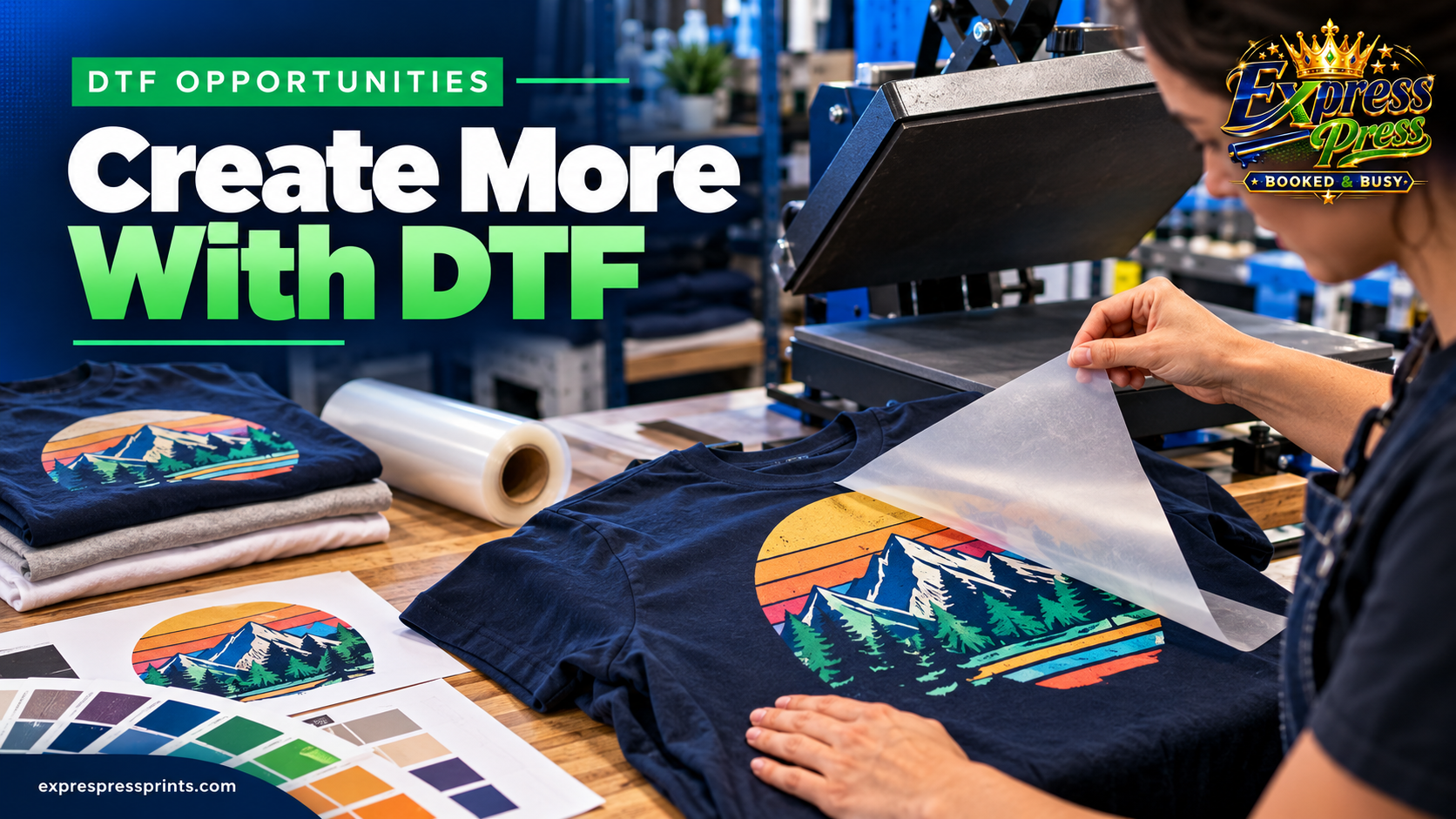
Step 5: Heat Press the Design Onto Fabric
The prepared transfer is positioned on the garment and applied using a heat press.
Temperature, pressure, pressing time, and peeling instructions depend on the transfer materials and supplier.
Always follow the instructions supplied with your specific DTF transfer rather than assuming one set of settings works for every product.
What Are the Benefits of DTF Printing?
DTF printing has become a popular option for custom apparel because it offers several practical advantages.
Full-Color Designs
DTF printing can reproduce multicolor logos, illustrations, gradients, and detailed graphics.
This makes it useful for designs that would be more complicated to produce using traditional multicolor screen printing.
Works With Many Fabric Types
DTF transfers can be applied to many cotton, polyester, and blended fabrics when the transfer system and pressing conditions are appropriate.
Fabric coatings, textures, stretch, and heat sensitivity can affect compatibility, so testing is recommended for unfamiliar materials.
Suitable for Small Orders
DTF printing can be practical for small quantities because it does not require the same screen preparation process used in traditional screen printing.
This makes it useful for small businesses, independent creators, and customers who need limited quantities of personalized apparel.
Detailed Artwork
DTF printing can reproduce fine details and colorful artwork, although extremely small text, thin lines, and certain effects may require adjustment.
Preparing artwork correctly helps produce cleaner, more consistent results.
Useful for Business Branding
Companies can use DTF printing to create branded T-shirts, hoodies, uniforms, and promotional apparel featuring their logos and designs.
What Fabrics Can You Use for DTF Printing?
DTF transfers are commonly used on several fabric types.
Cotton: A popular choice for custom T-shirts, casual clothing, and business uniforms.
Polyester: Often used for athletic apparel, sportswear, and performance clothing. Heat-sensitive fabrics may require adjusted application settings.
Cotton-Polyester Blends: Commonly used for hoodies, sweatshirts, and everyday apparel.
Other Compatible Textiles: Some DTF systems can work with additional fabrics, but compatibility depends on the material and transfer specifications.
Before pressing unfamiliar garments, confirm the fabric's heat tolerance and follow the transfer supplier's instructions.
DTF Printing vs. Traditional Screen Printing
For additional guidance, see our DTF versus sublimation printing comparison.
Both methods are widely used for custom apparel, but they serve different needs.
DTF Printing
DTF printing is useful for detailed, full-color designs, smaller production runs, and orders that require multiple colors without separate printing screens.
Screen Printing
Screen printing applies ink through prepared screens and can be especially cost-effective for large quantities of garments using simpler designs and limited colors.
Which Method Should You Choose?
For smaller custom orders or complex multicolor artwork, DTF printing may be a practical choice.
For large quantities of identical designs, traditional screen printing may offer advantages depending on the artwork and production setup.
The best option depends on your order quantity, design complexity, garment type, budget, and desired finish.
What Is a DTF Gang Sheet?
A DTF gang sheet is a layout that combines multiple designs onto one larger transfer sheet.
Instead of printing each design on a separate piece of film, multiple graphics can be arranged together to use the available printing space efficiently.
For example, a gang sheet might contain:
Several business logos
Multiple T-shirt graphics
Different sizes of the same design
Small promotional artwork
Designs for multiple customer orders
Gang sheets are particularly useful for businesses and creators who need several transfers.
ExpressPress offers DTF gang sheet printing options for customers preparing custom apparel projects.
How to Prepare Artwork for DTF Printing
Good artwork preparation is essential for professional printing.
Use High-Resolution Files
Prepare artwork at the intended print size using sufficient resolution for the design.
A common target for raster artwork is 300 DPI at the final print dimensions.
Use Transparent Backgrounds
Transparent backgrounds are helpful when the design should appear without a solid rectangular border.
PNG is a commonly accepted format for this purpose.
Check Fine Details
Very thin lines, tiny lettering, and intricate details may not transfer as expected.
Inspect your artwork at its intended physical print size before submitting it.
Avoid Blurry Images
Low-resolution screenshots, heavily compressed images, and artwork enlarged beyond its original quality can result in poor printing.
Use original design files whenever possible.
Confirm Artwork Requirements
Before placing an order, check the printing provider's accepted formats, dimensions, resolution requirements, and transfer specifications.
How Long Do DTF Transfers Last?
DTF transfers can remain durable through repeated wear and washing when they are properly produced, applied, and cared for.
However, durability depends on several factors:
Transfer film and ink quality
Adhesive powder and curing process
Fabric type
Heat-press application
Washing and drying habits
To help protect printed designs, follow the garment and transfer supplier's care instructions.
Avoid excessive heat and harsh treatment that could damage the print.
Is DTF Printing Good for Small Businesses?
DTF printing can be a useful option for small businesses that need custom apparel without committing to large quantities of one design.
Businesses commonly use DTF transfers for employee shirts, branded hoodies, event merchandise, promotional apparel, and clothing collections.
For businesses preparing several designs, DTF gang sheets may help organize multiple graphics into one print layout.
This flexibility makes DTF printing worth considering for startups, apparel sellers, local organizations, and growing brands.
Order DTF Transfers and Custom Apparel From ExpressPress
ExpressPress, based in Thomasville, Alabama, provides custom printing services for businesses, creators, organizations, and individuals.
Whether you're preparing artwork for custom T-shirts, ordering DTF transfers, or arranging designs on a gang sheet, ExpressPress offers printing and customization options to help bring your ideas to life.
Explore our DTF printing services, gang sheet options, and customizable apparel to get started.
Ready to start your custom printing project? Explore our DTF Transfers and Custom DTF Gang Sheets to choose the right option for your artwork and apparel needs.
Ready to create your next custom apparel project? Visit ExpressPress and explore your printing options today.
Frequently Asked Questions About DTF Printing
What does DTF stand for in printing?
DTF stands for Direct-to-Film. It is a printing method that uses transfer film, specialized inks, adhesive powder, and heat to apply designs to fabric.
Can DTF printing be used on cotton T-shirts?
Yes. DTF transfers are commonly used on cotton T-shirts when applied using compatible transfer materials and the correct pressing instructions.
Is DTF printing suitable for polyester?
DTF printing can work on many polyester fabrics, but application settings may need adjustment to account for heat sensitivity and other material characteristics.
Do I need a heat press for DTF transfers?
A suitable heat press is generally recommended for consistent temperature, pressure, and application results.
What is the difference between a DTF transfer and a DTF gang sheet?
A DTF transfer contains a design prepared for application. A gang sheet arranges multiple designs together on a larger sheet of transfer film.
Can I use my own logo for DTF printing?
Yes. You can prepare your business logo or custom artwork for DTF printing, provided the file meets the printing provider's artwork requirements and you have the necessary rights to use the design.
If you're preparing several designs for custom apparel, a DTF gang sheet can help organize your artwork efficiently. Read our guide to designing DTF gang sheets without wasting space to learn about layout, sizing, and artwork preparation.