Why Is My DTF Transfer Peeling After Washing? Causes & Fixes
Why Is My DTF Transfer Peeling After Washing? Causes & Fixes
A DTF design can look great when it first comes off the heat press, then start lifting at the corners or cracking after the first few washes. That is frustrating whether you are decorating a single T-shirt, producing uniforms, or preparing merchandise for customers.
DTF peeling after washing usually points to a weak adhesive bond, a mismatch between the transfer and garment, or laundering conditions that stress the print. Cracking is slightly different: the graphic's printed layer may split as the fabric stretches or flexes. The right fix depends on when the damage first appeared.
This guide explains how to identify the likely cause, what you can safely try, and how to prevent repeat failures. Always prioritize the pressing instructions supplied with your specific transfer and the care label on the garment; settings vary by film, adhesive, equipment, and fabric.
First, Identify the Type of DTF Print Failure
| What you notice | What it may mean | First thing to check |
|---|---|---|
| An edge lifts as you remove the carrier film | Incorrect peel timing, insufficient bond, or uneven pressure | Whether the film is hot-, warm-, or cold-peel |
| Corners start peeling after the first wash | Incomplete bonding or harsh first-wash conditions | Heat-press settings, pre-press, and wash timing |
| Most of the graphic separates from the shirt | Poor adhesion, trapped moisture, or incompatible fabric finish | Garment preparation and even platen contact |
| Fine cracks appear through the graphic | Excessive stretching, a stiff print layer, or heat/laundry stress | Garment stretch, artwork coverage, and drying heat |
| Colors dull but the print remains attached | Laundry conditions or print-production factors | Bleach, wash temperature, detergent, and sample quality |
A photograph of the damage, the garment fabric composition, the transfer supplier's instructions, and the number of wash cycles can help narrow down the cause.
1. The Transfer Did Not Receive Enough Heat, Time, or Pressure
DTF uses an adhesive layer that bonds the printed design to the garment during heat pressing. If the material does not receive the required combination of heat, dwell time, and consistent pressure, a print may initially look attached but fail when the shirt is washed or stretched.
How to prevent it:
Follow the exact application settings for the transfer you purchased rather than using one universal temperature for every DTF film.
Check that the press has actually reached its set temperature and heats evenly over the entire design area.
Apply the specified pressure; a press that closes without firm, even contact can leave poorly bonded edges.
Test the same transfer on a spare piece of the intended fabric before pressing a customer order.
More temperature is not always better. Polyester and certain performance fabrics can scorch, develop press marks, or experience dye migration when exposed to excessive heat. Make controlled adjustments using the transfer and garment manufacturers' guidance.
2. You Skipped the Garment Pre-Press
A shirt can hold moisture or have wrinkles even when it feels dry. Seams, collars, pockets, zippers, and other raised details can also keep part of the artwork from receiving equal pressure.
A short pre-press, when recommended by the transfer supplier, helps flatten the print area and reduce residual moisture. Then position the transfer on a smooth, suitable pressing surface. Keep thick seams and closures out of the heat-press contact zone whenever possible.
If the same corner keeps lifting on several shirts, check whether that corner sits near a seam or outside the press's evenly heated area.
3. You Peeled the Carrier at the Wrong Time
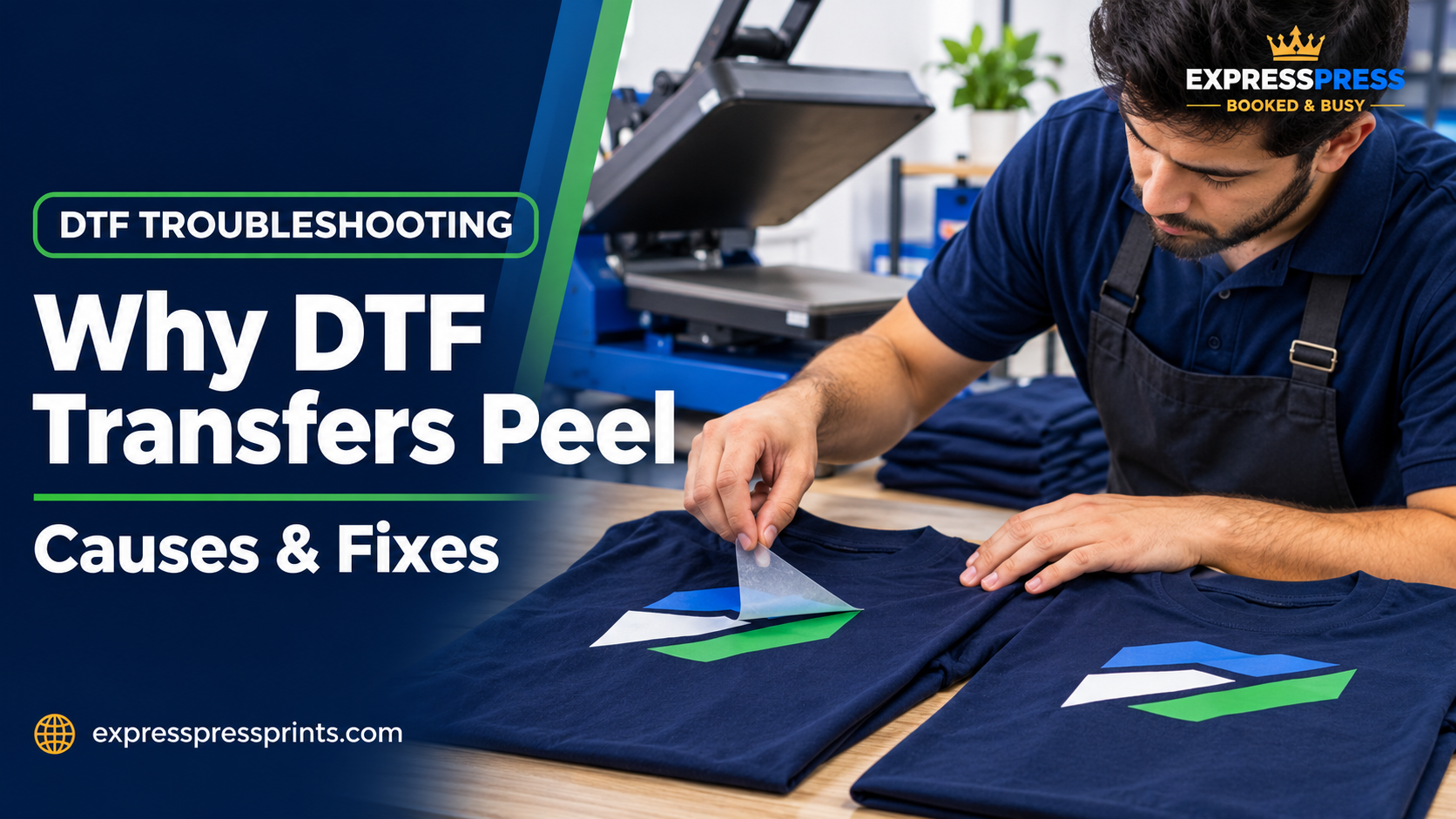
Not every DTF film is peeled the same way. Some products are hot-peel; others require a warm or fully cooled peel. Removing a cold-peel film too early, or treating a hot-peel film as if it uses different instructions, can cause elements to remain on the carrier instead of transferring cleanly.
Before production, confirm the exact peel method for your batch. Peel steadily and observe whether small letters, narrow strokes, and corners remain attached to the garment. If the film is still in place and the image begins lifting during the initial peel, stop and follow the supplier's specific instructions for a protected corrective press. Do not pull harder to force the design off the carrier.
ExpressPress has information on its DTF transfer options; verify the instructions provided with your actual order before applying the transfer.
4. A Required Second Press Was Missed
Many DTF suppliers recommend a brief second press after carrier removal, using an approved protective sheet. Depending on the transfer system, that finishing step can improve the bond and feel of the print. However, the protective material, time, temperature, and whether this step is required vary by supplier.
If your supplier instructs you to post-press, do not skip it. Use the recommended cover sheet, keep the garment flat, and protect details from direct contact with the hot platen. A second press is not a substitute for correcting a badly under-pressed first application.
5. The Fabric or Garment Finish Interfered With Adhesion
DTF transfers are commonly used on cotton, polyester, and blends, but the behavior of each fabric can differ. Highly textured materials, coated or water-repellent fabrics, stretchy knits, and garments with certain surface treatments may need additional testing or a transfer designed for that application.
When a design peels consistently on one garment style but works on another, compare the fabric composition, surface finish, and texture. Do not assume an identical press setting is correct for every blank.
For businesses decorating several shirt styles, start with a small trial batch of each fabric. The ExpressPress custom T-shirt collection can help you explore apparel options while you plan your project.
6. The Garment Washed Too Soon or Too Aggressively
Many transfer suppliers advise waiting at least 24 hours after pressing before the first wash. A garment may also be exposed to abrasion, strong detergents, bleach, fabric softeners, or unnecessarily high dryer temperatures that increase wear on the decoration.
For routine care, a cautious starting point is to:
Follow both the garment-care label and the transfer maker's instructions.
Wait for the stated first-wash period; 24 hours is a common recommendation, not a universal guarantee.
Turn the shirt inside out before washing.
Use a cool or cold gentle cycle with a suitable mild detergent.
Avoid bleach and fabric softener when the transfer's care instructions prohibit them.
Air-dry where practical, or use low dryer heat only when both the garment and transfer instructions allow it.
Never iron directly over the printed design.
Care instructions cannot rescue a transfer that was never bonded correctly, but good laundering habits can reduce unnecessary stress on a properly applied print.
7. The Print Was Too Rigid for a Stretchy Garment
A large, solid graphic on a very stretchy shirt experiences different forces from a small left-chest emblem on a stable cotton tee. When a graphic is excessively stiff for the garment, repeated stretching may contribute to cracking. Heavy ink coverage, curing differences, and incompatible materials can also play a role.
If cracking appears in areas that repeatedly stretch—such as across a fitted shirt—check whether the transfer material was suitable for the fabric and design. Do not solve a flexibility problem simply by raising the press temperature. Consider a tested transfer and artwork combination that matches the intended garment.
Can You Fix a DTF Transfer That Is Already Peeling?
Sometimes a newly applied transfer can be corrected; a badly damaged, already-washed print is much less predictable. The safe approach depends on its current condition.
If an Edge Lifts During Initial Carrier Removal
If you have not finished peeling the film, stop. Check the supplier's peel instructions and, where explicitly permitted, place the carrier back down or use the specified protective sheet for a corrective press. Let it reach the correct peel state before trying again.
If a Small Edge Lifts Before the First Wash
Contact the transfer supplier for the appropriate recovery procedure. A protected, carefully controlled re-press may work with certain products, but overheating can damage the fabric or artwork. Test before attempting to repair a customer garment.
If the Design Has Cracked or Peeled After Washing
Re-pressing a washed, cracked, contaminated, or partly detached transfer may not produce a durable or visually clean repair. Do not apply household glue or iron directly over the ink. For customer orders, replacing the affected garment or reprinting with corrected application conditions is often the more dependable option.
A Simple Wash-Test Checklist Before Selling Custom Shirts
One successful first press does not tell you how a print will behave after laundering. If you produce shirts for customers, create a small sample test using the same blank, artwork, transfer batch, and equipment planned for the order.
| Test stage | What to record |
|---|---|
| Before pressing | Fabric composition, transfer batch, and garment surface |
| During pressing | Actual platen temperature, time, pressure, and peel method |
| After pressing | Edge adhesion, small-detail transfer, appearance, and feel |
| After initial waiting period | First-wash timing and wash/dry method |
| After repeated test washes | Any lifting, cracking, fading, or excessive stiffness |
Compare results before changing several settings at once. If a sample fails, adjust one factor under the supplier's guidance and repeat the test. This helps identify the cause instead of relying on guesswork.
Common DTF Peeling Questions
Why did my DTF transfer peel after one wash?
A weak initial adhesive bond is one possibility, particularly if heat, time, or pressure was insufficient or the garment was not prepared correctly. Washing too soon or using harsh laundry conditions can contribute. Inspect the failure pattern and check your specific transfer's instructions.
Is peeling the same as cracking?
No. Peeling means part of the transfer is lifting away from the fabric. Cracking means the printed layer is splitting while it may still be attached. They can share some causes, but a rigid print on a stretchy garment is especially relevant when diagnosing cracks.
Can I use an ordinary iron instead of a heat press?
Some transfer brands publish iron or craft-press instructions, but many production workflows rely on a heat press for repeatable temperature and pressure. Use only a method expressly supported by the transfer supplier. Do not assume the settings for a commercial press will produce the same result with a household iron.
How long should I wait before washing DTF-printed clothing?
Many suppliers recommend at least 24 hours after application. Your specific transfer and garment may require different care, so follow the supplied instructions.
Does DTF work on polyester?
Many DTF systems can be used on polyester, but application temperatures and pressure may differ from cotton. Test sensitive, dyed, coated, or performance fabrics before production.
Why do small letters lift while the larger design stays on?
Small details have less bonded surface area and can be more sensitive to uneven pressure, incorrect peel timing, or incomplete adhesion. Check the artwork's line thickness and the supplier's application guidance.
Keep Your Next DTF Print Looking Better, Longer
The best way to prevent DTF transfers from peeling after washing is to identify the point of failure, then correct the material, preparation, press settings, peel method, or care routine responsible. Always test unusual garments and new transfer batches before making a large run.
If you are planning custom apparel, explore ExpressPress DTF transfers and custom DTF gang sheets. For questions about a particular transfer or fabric, contact ExpressPress before pressing a full order.