DTF Printing on Cotton vs. Polyester: Which Fabric Works Best?
DTF Printing on Cotton vs. Polyester: Which Fabric Works Best?
Choosing the right fabric is an important part of creating high-quality custom apparel.
Whether you're printing company uniforms, personalized T-shirts, sportswear, or promotional merchandise, the material you select can affect comfort, appearance, transfer application, and durability.
Two of the most common fabrics used for custom apparel are cotton and polyester.
Both can work with Direct-to-Film (DTF) printing, but they behave differently during heat pressing and everyday use.
So, is cotton or polyester better for DTF printing?
In this guide, ExpressPress explains the differences between DTF printing on cotton and polyester, including fabric compatibility, print quality, heat sensitivity, washing, and the best applications for each material.
What Is DTF Printing?
For additional guidance, see our DTF printing beginner’s guide.
DTF stands for Direct-to-Film printing.
This printing process involves printing artwork onto specialized transfer film, applying adhesive powder, curing the transfer, and using heat and pressure to apply the design to a compatible garment.
DTF printing is commonly used for colorful logos, illustrations, personalized graphics, and branded apparel.
One of its advantages is the ability to decorate different fabric types without requiring a separate screen for every color.
However, the correct pressing conditions depend on the transfer materials, garment construction, and fabric properties.
Can You Use DTF Printing on Cotton?
Yes. DTF transfers are commonly used on cotton T-shirts and other compatible cotton garments.
Cotton is a popular fabric for everyday apparel because of its familiar feel, breathability, and versatility.
DTF transfers can be applied to cotton using suitable equipment and the correct application instructions.
Benefits of DTF Printing on Cotton
Cotton garments offer several advantages for custom apparel projects.
Comfort: Cotton is commonly chosen for casual clothing and everyday uniforms.
Versatility: Cotton T-shirts are available in many styles, colors, and sizes.
Branding: Cotton shirts are suitable for company logos, promotional graphics, and personalized designs.
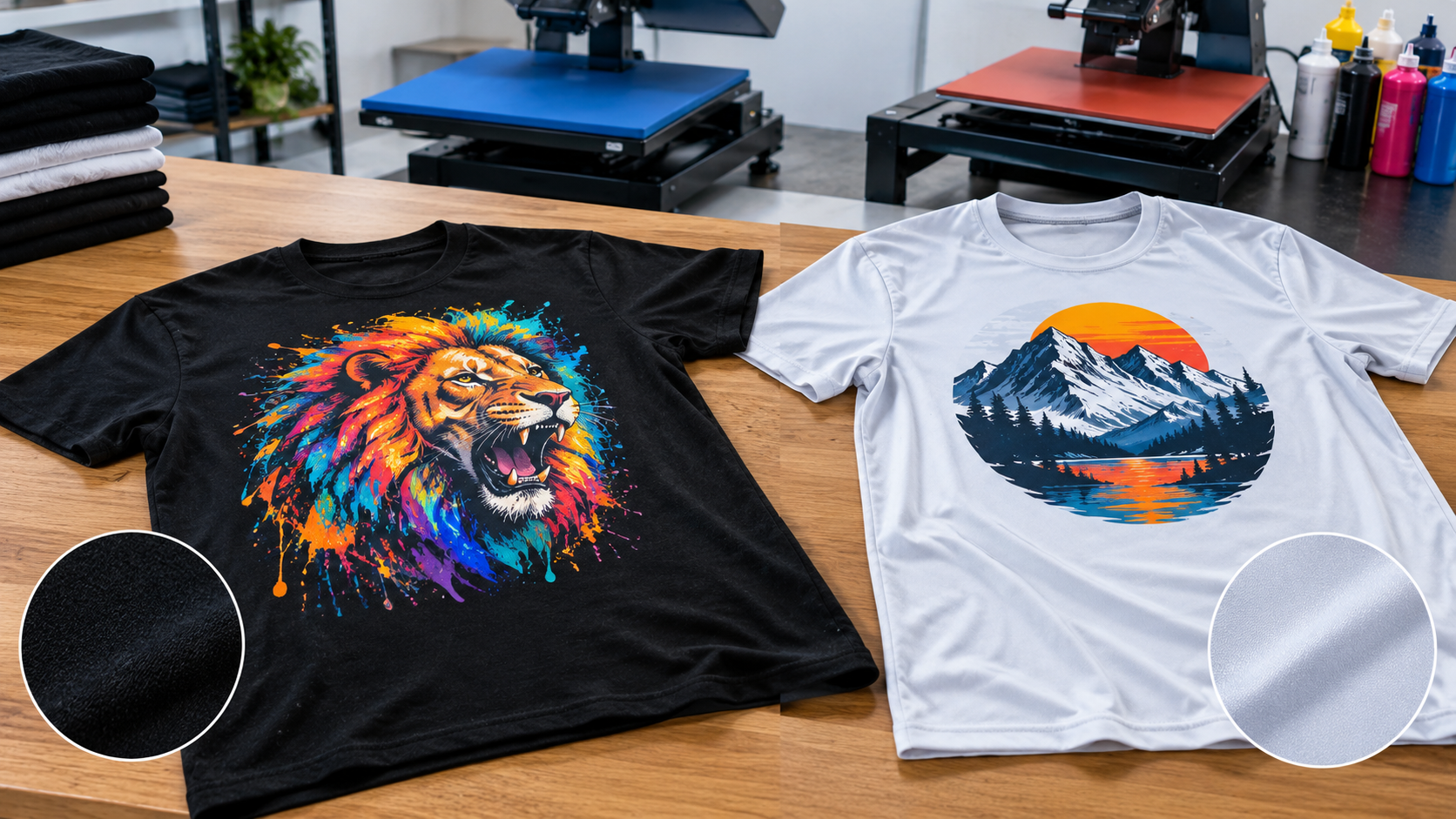
Dark garments: DTF transfers with an appropriate white ink underbase can produce colorful designs on black, navy, and other dark-colored cotton shirts.
Challenges of DTF Printing on Cotton
Cotton can retain moisture, which may affect heat-transfer application.
Some garments may also shrink or change shape when exposed to excessive heat.
Pre-pressing, moisture management, and proper application settings can help reduce problems, depending on the transfer supplier's instructions.
Can You Use DTF Printing on Polyester?
Yes. DTF printing can work on many polyester garments when compatible transfer materials and application settings are used.
Polyester is commonly found in athletic clothing, performance shirts, uniforms, and lightweight apparel.
However, polyester can be more sensitive to heat than some cotton fabrics.
Benefits of DTF Printing on Polyester
Polyester is useful for several types of apparel.
Lightweight garments: Many polyester shirts are designed for active use.
Moisture management: Certain polyester performance fabrics are engineered to wick moisture away from the body.
Shape retention: Some polyester garments resist wrinkling and maintain their shape well.
Custom branding: Compatible DTF transfers can be used for sports teams, business uniforms, and promotional apparel.
Challenges of DTF Printing on Polyester
Polyester may experience problems when exposed to inappropriate heat or pressure.
Possible issues include:
Fabric scorching or discoloration
Heat marks
Dye migration
Transfer adhesion problems
Changes in fabric texture
Dye migration occurs when dyes from the garment move into the printed design, potentially changing its appearance.
This is particularly important when printing light-colored artwork onto dark polyester garments.
Using transfer systems designed for polyester and following the manufacturer's instructions can help reduce these risks.
DTF on Cotton vs. Polyester: Key Differences
Both fabrics can produce attractive DTF prints, but their properties differ.
| Feature | Cotton | Polyester |
|---|---|---|
| DTF compatibility | Commonly compatible | Compatible with suitable transfers |
| Heat sensitivity | Depends on garment construction | Often requires additional caution |
| Dye migration | Generally less of a concern | Can be an important concern |
| Everyday comfort | Familiar, breathable feel | Depends on fabric construction |
| Sportswear applications | Suitable for some uses | Common in performance apparel |
| Dark garment printing | Suitable with compatible transfers | Suitable with dye-migration precautions |
| Fabric shrinkage | May shrink under certain conditions | Often more dimensionally stable |
| Best applications | Casual shirts and business apparel | Athletic wear and performance uniforms |
Neither fabric is universally better.
The best choice depends on the garment's intended use, the printing system, and the customer's preferences.
Which Fabric Produces Better DTF Print Quality?
DTF print quality depends on more than fabric composition.
Important factors include:
Original artwork quality
Transfer film and ink
Adhesive powder
Curing process
Application temperature and pressure
Fabric surface and construction
Garment dyes and finishes
DTF Print Quality on Cotton
Cotton is a common choice for custom graphics and company logos.
A properly applied transfer can produce sharp, colorful artwork on compatible cotton garments.
However, fabric texture and garment quality can affect the final appearance.
DTF Print Quality on Polyester
Polyester can also produce detailed, colorful designs.
The main considerations are heat sensitivity, garment dye stability, and transfer compatibility.
For dark polyester, dye-blocking or low-temperature transfer solutions may be appropriate when recommended by the transfer manufacturer.
Best practice: Choose the fabric based on the intended garment and use a transfer system suitable for that material.
Does DTF Printing Feel Different on Cotton and Polyester?
DTF transfers form a printed layer on the garment.
The feel of that layer depends on the design's size, ink coverage, transfer construction, and application.
A small left-chest logo may feel relatively light, while a large solid graphic may be more noticeable.
The garment itself also affects comfort.
Cotton and polyester can feel different because of their fiber properties, knit structure, weight, and finishing treatments.
For comfortable custom apparel, consider both the fabric and the size of the printed design.
Which Fabric Is Better for Business Uniforms?
Businesses often choose apparel based on employee comfort, durability, appearance, and working conditions.
Cotton for Business Uniforms
Cotton T-shirts can be suitable for:
Retail employees
Casual office environments
Promotional events
Restaurants and service businesses
Community organizations
Everyday branded apparel
Cotton is often selected when a familiar casual feel is the priority.
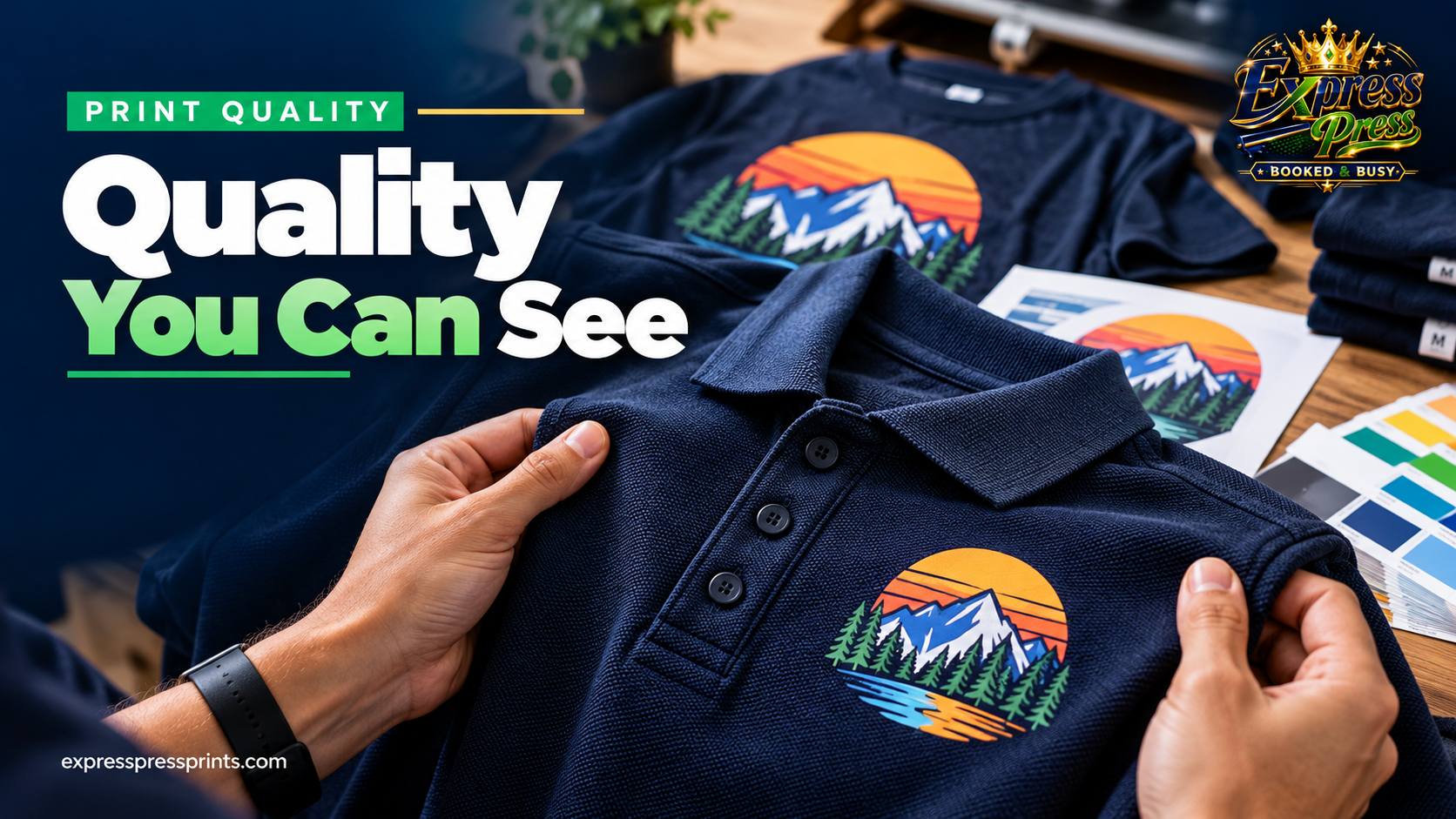
Polyester for Business Uniforms
Polyester garments can be suitable for:
Sports teams
Fitness businesses
Outdoor events
Certain active workplaces
Performance apparel
Lightweight team uniforms
The ideal choice depends on the actual garment's construction and workplace requirements.
DTF Printing on Cotton-Polyester Blends
Many popular T-shirts, hoodies, and sweatshirts use cotton-polyester blends.
These fabrics combine characteristics of both fibers.
DTF printing can work on compatible blended garments, but application settings should account for the fabric composition.
For example, a blend with a high polyester content may require additional attention to heat sensitivity and dye migration.
Always check the garment label and transfer manufacturer's instructions before pressing.
What About DTF Printing on Dark Fabrics?
DTF printing is often used for dark-colored garments because compatible systems can print a white ink underbase beneath colored artwork.
This helps the design remain visible on black, navy, maroon, and other dark fabrics.
However, the garment's dye stability remains important.
Dark polyester fabrics may be more susceptible to dye migration than many cotton garments.
For unfamiliar garments, testing is recommended before beginning a larger production run.
How to Prevent Common DTF Printing Problems
Proper preparation can reduce avoidable transfer issues.
1. Check Fabric Compatibility
Confirm that the transfer is suitable for the garment material.
2. Follow Supplier Pressing Instructions
Do not assume every DTF transfer requires the same temperature, time, or pressure.
3. Consider Moisture
Some garments may benefit from a brief pre-press to remove moisture, when recommended by the supplier.
4. Watch for Dye Migration
Be particularly careful with dark polyester and highly dyed performance fabrics.
5. Test Unfamiliar Garments
Before producing a large batch, test the intended transfer on a sample garment when possible.
6. Review Artwork Quality
Use clear, properly sized artwork with suitable resolution.
7. Follow Care Instructions
Washing and drying practices can affect print durability and garment appearance.
Cotton vs. Polyester for Custom T-Shirts: Which Should You Choose?
For additional guidance, see our custom cotton T-shirt.
Choose cotton when you want everyday casual apparel, a familiar fabric feel, and versatile options for company branding.
Choose polyester when you need certain performance-oriented garments, lightweight athletic apparel, or moisture-management features.
Choose a cotton-polyester blend when you want a combination of characteristics, provided the garment and transfer system are compatible.
For DTF printing, the most important consideration is not simply whether the fabric is cotton or polyester.
It is whether the selected garment and transfer materials work well together.
You can also explore DTF transfers and DTF versus sublimation guide for related printing information and available ExpressPress options.
Custom DTF Printing and Apparel From ExpressPress
ExpressPress provides custom printing and apparel services for businesses, organizations, teams, and individuals.
Based in Thomasville, Alabama, ExpressPress offers options for custom T-shirts, hoodies, DTF transfers, and gang sheet printing.
Whether you're preparing business uniforms, sportswear, or personalized apparel, selecting the right fabric and artwork can help improve your final results.
Explore our DTF printing and custom apparel services to begin your next project.
Ready to create custom printed apparel? Visit ExpressPress to explore your printing options.
Frequently Asked Questions
Is cotton better than polyester for DTF printing?
Cotton is a common and versatile option for DTF printing, but polyester can also work well with compatible transfers. The better choice depends on the garment and intended use.
Can DTF transfers be applied to 100% polyester?
Yes, many polyester garments can be decorated with suitable DTF transfers. Heat sensitivity and dye migration should be considered.
Does DTF printing last longer on cotton or polyester?
Durability depends on transfer quality, application, fabric compatibility, and care. Neither material guarantees a longer-lasting print in every situation.
Can you print DTF on dark polyester shirts?
Yes, but dark polyester can present dye-migration challenges. Compatible transfer systems and appropriate application settings are important.
Can DTF printing work on cotton-polyester blends?
Yes, DTF transfers can work on many blended fabrics when the transfer system and pressing conditions are suitable.
Does polyester require lower heat for DTF printing?
Some polyester garments require lower-temperature application methods because of heat sensitivity. Always follow the transfer supplier's recommendations.
Is DTF printing suitable for sportswear?
DTF can be suitable for certain sportswear garments, but stretch, fabric composition, moisture-management finishes, and application requirements should be considered.