How to Order Custom T-Shirts for Your Business: A Complete Guide

How to Order Custom T-Shirts for Your Business: A Complete Guide
Custom T-shirts are one of the simplest ways to make your business look more professional, promote your brand, and create a consistent appearance for your team.
Whether you operate a restaurant, retail store, landscaping company, cleaning service, construction business, or small startup, custom T-shirts with your company logo can help employees represent your business wherever they work.
However, ordering business T-shirts involves more than uploading a logo and choosing a shirt color.
You need to consider fabric, sizes, printing methods, logo placement, artwork quality, quantity, and overall cost.
In this guide, ExpressPress explains how to order custom T-shirts for your business, step by step, so you can make informed decisions and avoid common mistakes.
Why Should Businesses Invest in Custom T-Shirts?
Branded T-shirts can serve several purposes beyond everyday clothing.
Create a Professional Business Appearance
Matching company shirts help employees present a coordinated appearance.
For customer-facing businesses, branded apparel can also make team members easier to identify.
Increase Brand Visibility
A T-shirt featuring your company name or logo can introduce your business to potential customers during everyday activities.
Employees wearing branded apparel at job sites, community events, or local businesses may help increase brand recognition.
Build Team Identity
Coordinated apparel can help employees feel connected to the organization they represent.
Custom shirts are useful for company events, team activities, promotional campaigns, and everyday uniforms.
Support Marketing and Promotions
Custom business T-shirts can also be used as promotional merchandise.
For example, companies may distribute branded shirts during community events, product launches, fundraisers, or customer appreciation campaigns.
Step 1: Decide How Your Business Will Use the T-Shirts
Before choosing a garment, determine its purpose.
Different businesses need different types of apparel.
Employee uniforms: Prioritize comfort, durability, consistent branding, and practical colors.
Promotional giveaways: Consider affordability, broad size availability, and an eye-catching design.
Company events: Choose shirts that match your event theme and are comfortable for participants.
Retail merchandise: Focus on fabric quality, design appeal, fit, and the preferences of your target audience.
Outdoor workwear: Consider breathable materials, weather conditions, and any workplace safety requirements.
Understanding the purpose of your shirts will make the remaining decisions easier.
Step 2: Choose the Right T-Shirt Material
Fabric affects comfort, appearance, printing compatibility, and garment care.
100% Cotton T-Shirts
Cotton is a popular choice for everyday business apparel.
It offers a familiar feel and is commonly used for casual uniforms, promotional shirts, and personalized merchandise.
Cotton garments can be suitable for several decoration methods, including compatible DTF transfers and screen printing.
Polyester T-Shirts
Polyester is frequently used for performance apparel and athletic clothing.
Some polyester fabrics are designed to manage moisture and dry quickly, making them useful for certain active workplaces.
Printing compatibility depends on the specific fabric and decoration method.
Cotton-Polyester Blends
Blended fabrics combine characteristics of cotton and polyester.
They are commonly used for casual apparel and may offer a balance of comfort, shape retention, and practical care.
The best choice depends on your workplace, budget, and employees' preferences.
Step 3: Choose Your Business T-Shirt Colors
Your shirt color should complement your company branding while remaining practical for everyday use.
Black T-Shirts
Black shirts can create a clean, professional appearance and work well with many contrasting logo colors.
They are commonly used for retail teams, hospitality staff, promotional merchandise, and casual uniforms.
Navy Blue T-Shirts
Navy is a versatile option for businesses seeking a professional look.
It can be suitable for employee uniforms, service teams, and branded company apparel.
White T-Shirts
White shirts provide a bright background for colorful artwork.

However, they may show stains more easily in some work environments.
Gray T-Shirts
Gray is a practical neutral option that pairs with many logo colors.
It can work well for casual business uniforms and promotional apparel.
Brand-Matched Colors
If your company has an established brand color, consider choosing a shirt that complements your logo and marketing materials.
Make sure your artwork has enough contrast to remain readable on the selected garment.
Step 4: Decide Where to Print Your Company Logo
Logo placement influences how professional and noticeable your custom T-shirts appear.
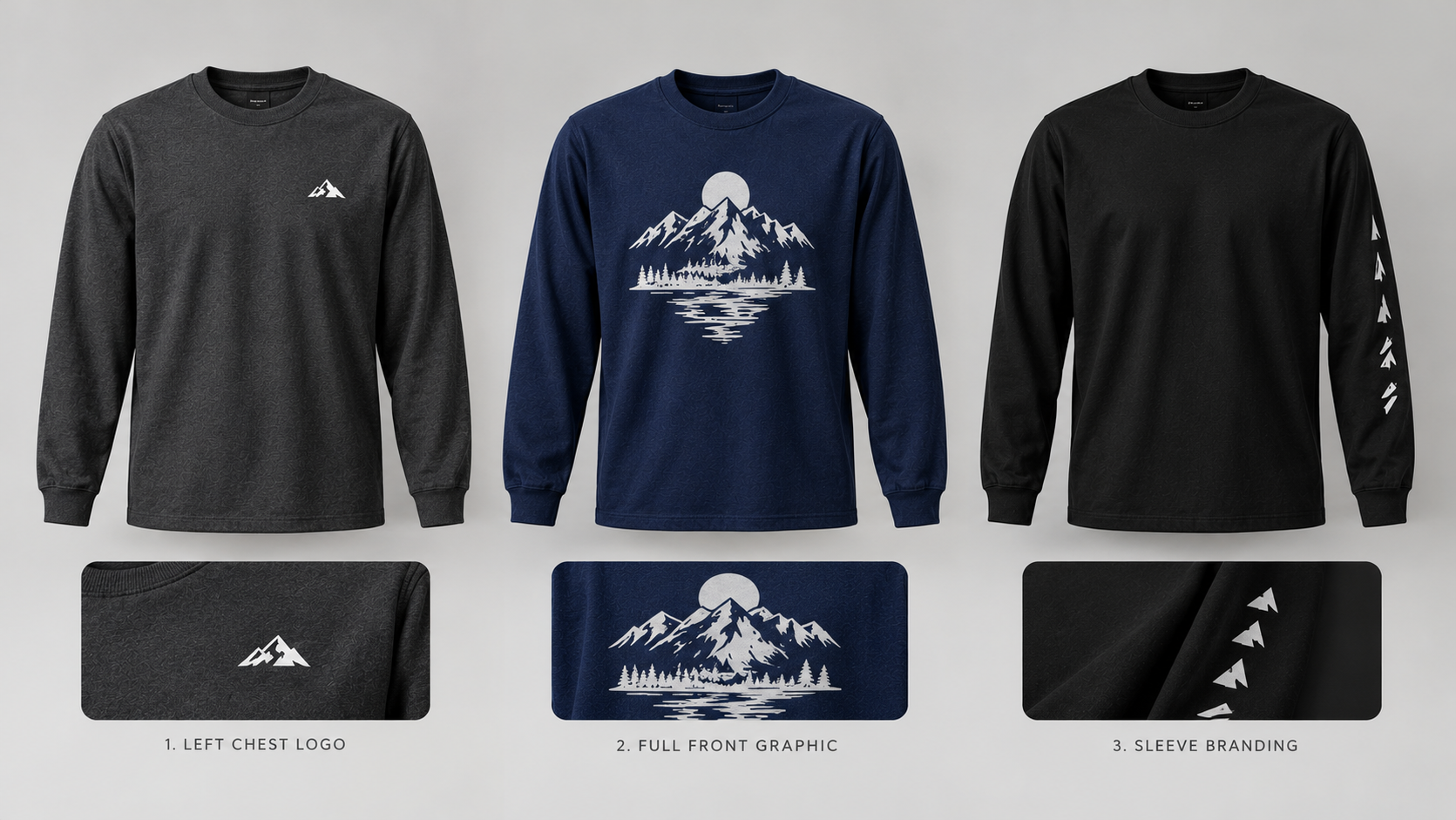
Left Chest Logo
A small left-chest logo is a popular option for employee uniforms.
It provides a subtle, professional appearance without dominating the shirt.
Full Front Printing
Large front designs are useful for promotional shirts, company events, and branded merchandise.
This placement offers more space for logos, graphics, and messages.
Back Printing
Back printing is useful when you want your company name, slogan, or contact information to remain visible.
It can be especially practical for service businesses and event teams.
Sleeve Printing
Sleeve printing can add a secondary logo, business name, or small decorative detail.
Availability depends on the garment and printing configuration.
Front and Back Combination
Some businesses choose a small logo on the front and a larger design on the back.
This arrangement can balance professional branding with increased visibility.
Before ordering, check the available printing placements and pricing for your selected product.
Step 5: Prepare Your Business Logo for Printing
For additional guidance, see our custom T-shirt artwork file format guide.
Artwork quality is essential for professional custom T-shirts.
A blurry or poorly prepared logo may not print as clearly as expected.
Use the Original Logo File
Whenever possible, use the original artwork provided by your designer.
Avoid taking screenshots from your website or social media pages.
Choose a Suitable File Format
Common artwork formats include:
PNG for high-resolution graphics and transparent backgrounds
SVG for scalable vector logos
AI for editable Adobe Illustrator artwork
PDF for properly prepared professional layouts
PSD for layered Photoshop artwork
ExpressPress supports several artwork upload formats through its customization tools.
Check Image Resolution
For raster artwork, approximately 300 PPI at the intended print dimensions is a useful preparation target.
However, actual artwork requirements depend on the printing method and production workflow.
Use Transparent Backgrounds When Appropriate
If you want only your company logo printed, remove unwanted background areas.
A transparent PNG can help prevent an unintended rectangular background from appearing around the design.
Check Logo Readability
Make sure small lettering, thin lines, and decorative elements remain clear at the final printing size.
For more information, read our guide on the best file formats for custom T-shirt printing.
Step 6: Select the Right T-Shirt Sizes
One of the most common ordering mistakes is guessing employee sizes.
Before placing a business apparel order, collect accurate size preferences from your team.
Create a Size List
Record each employee's preferred size and quantity.
For example:
| Size | Quantity |
|---|---|
| Small | 3 |
| Medium | 6 |
| Large | 8 |
| XL | 5 |
| 2XL | 3 |
| Total | 25 |
This is an illustrative example, not an ExpressPress inventory or pricing quote.
Check the Garment Size Chart
Sizes can vary between clothing brands and styles.
A medium in one shirt may fit differently from a medium in another.
Whenever possible, review the specific garment's size chart before ordering.
Consider Extra Shirts
Some businesses order a few additional shirts for future employees, replacements, or unexpected sizing needs.
Whether this is worthwhile depends on your budget and staffing plans.
Step 7: Choose a Suitable T-Shirt Printing Method
Different printing methods are suitable for different types of orders.
DTF Printing
Direct-to-Film printing uses printed transfer film, adhesive powder, and heat to apply designs to compatible fabrics.
DTF can be useful for detailed, full-color artwork and smaller orders.
It is commonly used for company logos, promotional graphics, and personalized apparel.
Screen Printing
Screen printing applies ink through prepared screens.
It can be economical for larger quantities of identical designs, particularly when the artwork uses a limited number of colors.
Sublimation Printing
Traditional sublimation printing works best on suitable white or light-colored polyester garments.
It is not intended for direct printing onto ordinary untreated cotton.
Which Printing Method Is Best for Business T-Shirts?
The right method depends on:
Shirt material
Garment color
Design complexity
Number of shirts
Printing placement
Budget
Desired print appearance
Ask your printing provider which available method is appropriate for your order.
Step 8: Understand Custom T-Shirt Pricing
Custom T-shirt pricing depends on more than the blank garment.
Several factors can influence the total cost.
Garment Type
Different fabric types, brands, and garment styles may have different prices.
Shirt Size
Some products have different prices for larger sizes.
Printing Method
The chosen decoration method can affect production costs.
Print Placement
Adding designs to multiple locations may increase the total price.
Order Quantity
Some printing workflows offer better per-unit economics for larger quantities, although discounts depend on the provider.
Artwork Preparation
Artwork that requires significant cleanup or redesign may involve additional work.
Shipping and Taxes
Include applicable shipping charges and taxes when calculating your final order budget.
For accurate pricing, review the product's available options and final checkout total.
Step 9: Consider Ordering Custom T-Shirts in Bulk
Businesses often need multiple shirts for employees, promotional events, or branded merchandise.
Planning your order carefully can help reduce errors.
Before ordering a larger quantity:
Confirm your final artwork.
Check all employee sizes.
Verify garment colors.
Review print placement.
Confirm the required quantities.
Check the expected production schedule.
Review shipping requirements.
For larger or more complicated orders, consider contacting the printing provider to confirm the available production options.
Step 10: Review Your Design Before Ordering
Before completing your order, inspect the final design carefully.
Check that:
Your company name is spelled correctly.
The logo uses the correct colors.
The artwork is positioned properly.
The design dimensions are appropriate.
All requested print locations are selected.
Shirt sizes and quantities are correct.
The final order total matches your expectations.
Taking time to review these details can help prevent avoidable mistakes.
How to Order Custom Business T-Shirts From ExpressPress
ExpressPress offers custom apparel printing services for businesses, organizations, and individuals.
To begin your order:
1. Choose Your Product
Browse the available custom T-shirts or other apparel options.
2. Select Your Printing Configuration
Choose from the available printing styles and placements for the selected product.
3. Choose Your Color and Size
Select the available garment color and size that fits your needs.
4. Upload Your Company Logo
Use the artwork upload or customization tools to provide your design.
5. Review Your Order
Check the selected product configuration, quantities, pricing, and artwork.
6. Complete Checkout
Follow the available checkout process to place your order.
For orders requiring special arrangements, contact ExpressPress before purchasing.
What Businesses Can Benefit From Custom T-Shirts?
Custom company shirts can be useful across many industries.
Restaurants and cafés: Branded shirts can help staff maintain a coordinated appearance.
Cleaning companies: Matching uniforms help employees represent the business while working at customer locations.
Landscaping companies: Branded apparel can improve team identification on job sites.
Construction and trade businesses: Company shirts can support everyday branding, although they do not replace required protective equipment.
Retail stores: Coordinated shirts can make staff easier for customers to recognize.
Schools and organizations: Custom shirts can be used for clubs, events, teams, and fundraisers.
Small businesses: Branded merchandise can help promote a growing company.
Custom T-Shirts vs. Polo Shirts for Business Uniforms
For additional guidance, see our custom logo polo shirts.
Both custom T-shirts and logo polo shirts are useful for company apparel.
T-shirts are often a practical choice for casual workplaces, outdoor teams, promotional events, and everyday employee clothing.
Polo shirts provide a collared appearance that may be preferable for offices, customer-facing employees, restaurants, and corporate events.
Some businesses use both styles depending on employee responsibilities and workplace conditions.
Common Mistakes to Avoid When Ordering Business T-Shirts
Ordering Without Confirming Sizes
Collect employee size information before placing the order.
Using Low-Resolution Logos
Avoid blurry screenshots and low-quality artwork.
Choosing Poor Logo Contrast
Make sure the logo remains visible against the garment color.
Forgetting Additional Print Locations
Check whether your business needs a back logo, sleeve graphic, or secondary design.
Ignoring the Production Schedule
Plan ahead for company events, seasonal promotions, and uniform deadlines.
Skipping the Final Artwork Review
Verify spelling, layout, placement, and quantities before completing checkout.
You can also explore custom cotton T-shirts and bulk T-shirt order planning guide for related printing information and available ExpressPress options.
Custom Business T-Shirt Printing in Thomasville, Alabama
ExpressPress is based in Thomasville, Alabama, providing personalized printing services for businesses, organizations, and individuals.
Whether you're preparing uniforms for a small team, ordering promotional shirts for an event, or creating branded apparel for your company, ExpressPress offers customizable apparel options to help bring your designs to life.
Explore custom T-shirts, logo polo shirts, hoodies, and other apparel options to find a suitable fit for your business.
Ready to order custom T-shirts for your business? Explore ExpressPress custom apparel and start designing your company shirts today.
Frequently Asked Questions About Custom Business T-Shirts
What is the best material for business T-shirts?
Cotton, polyester, and blended fabrics can all be suitable. The best option depends on workplace conditions, comfort preferences, printing requirements, and budget.
Can I print my company logo on T-shirts?
Yes. Custom apparel printing allows businesses to add logos, company names, artwork, and promotional designs to compatible garments.
Where should a company logo go on a T-shirt?
Left chest and full front are common placements. Back and sleeve printing may also be useful depending on the garment and available options.
How many custom T-shirts should I order for employees?
Start with your actual employee count and size requirements. Consider whether additional shirts are needed for replacements, new hires, or events.
Can I order custom T-shirts in bulk?
Many custom printing providers support larger orders, but available quantities, pricing, and production arrangements vary. Confirm the details with your chosen provider.
What file format should I use for my business logo?
Original vector files such as SVG or AI are useful for scalable logos. High-resolution transparent PNG files are also commonly used for custom printing.
Are custom T-shirts good for small business marketing?
They can help increase brand visibility, create a consistent team appearance, and provide promotional merchandise for customers or events.
How much do custom business T-shirts cost?
Pricing depends on garment type, size, printing configuration, order quantity, and applicable shipping or taxes. Review the available product options for accurate pricing.